Power outages · Winter storms · US, UK, Canada, Australia
Your power outage emergency kit and plan, sized for your household
Know what to pack, which fridge food to keep, how to heat one room safely and how many hours your generator or power station will run. Every answer comes with the numbers worked out and the official source linked.
- Primary sources linked in every guide
- A date on every page
- Written for US, UK, Canadian and Australian homes
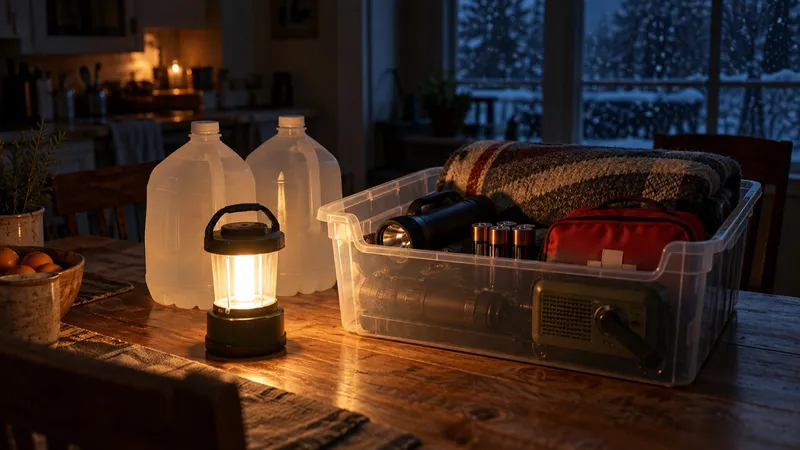
The answers you need when the lights go out
Five topics that keep your home safe, fed and warm for days without grid power.
-
The kit: what to pack, and how much
Exact quantities for your household and the outage length you plan for, built from the official US, UK, Canadian and Australian lists. Start with what is already in your cupboards.
Answered: What goes in a power outage kit? · Three days or a week? · Which radio, FM or DAB?
-
Food and water when the power is off
The hour-by-hour timeline for your fridge and freezer, a keep-or-toss call for each food, and the water you need per person per day.
Answered: Is my fridge food still safe? · How much water per person? · Can I refreeze it?
-
Staying warm and keeping the house safe
Keep one room warm for days, pick a heat source that is safe indoors and stop the pipes freezing while the heating is off.
Answered: Can I use the gas oven for heat? · Should I drip my faucets? · How fast will the house cool?
-
Backup power, sized with real numbers
Generators and power stations sized in watts and watt-hours from your own appliance labels. Buy the right size once and run it safely.
Answered: What size runs a fridge? · How far from the house? · Power station or generator?
-
When someone depends on power
CPAP, oxygen, insulin, a well pump, a new baby or a parent who lives alone. Plans for the households a standard checklist forgets.
Answered: How long will a CPAP battery last? · Keeping insulin cold? · Priority registers?
Latest guides
- How long will food last in a fridge or freezer without power?
Food in a closed fridge stays safe for about 4 hours without power (USDA, UK Food Standards Agency). A full freezer holds about 48 hours, a half-full one 24. If a thermometer shows the fridge at or below 40°F (4°C), keep the food; if it was warmer for over 4 hours, throw out perishables.
- Power outage emergency kit: what to pack for your household
A power outage emergency kit is the water, food, light, radio and phone power that carry a household through at least 3 days. Water is the number that varies: 3 litres per person per day in the UK, about 4 litres in Canada, 1 gallon in the US. Multiply by people and days, then cross off what you already own.
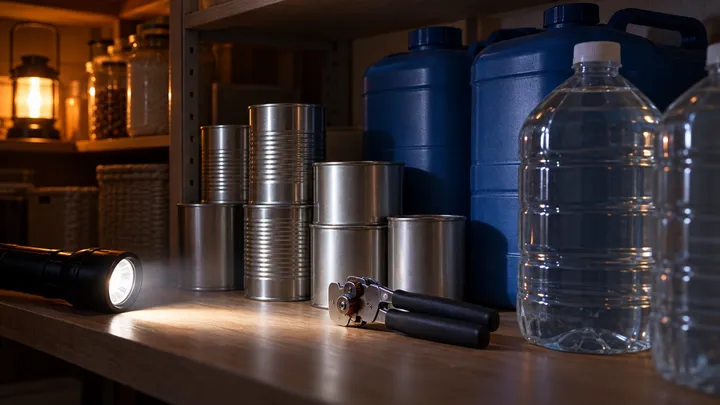
Know what to keep, what to toss and how much water you need
The 4-hour fridge rule is only the start. Our food and water guides give you the timeline for a full or half-full freezer, a keep-or-toss table by food type and water amounts per person, scaled to your household and your pets.
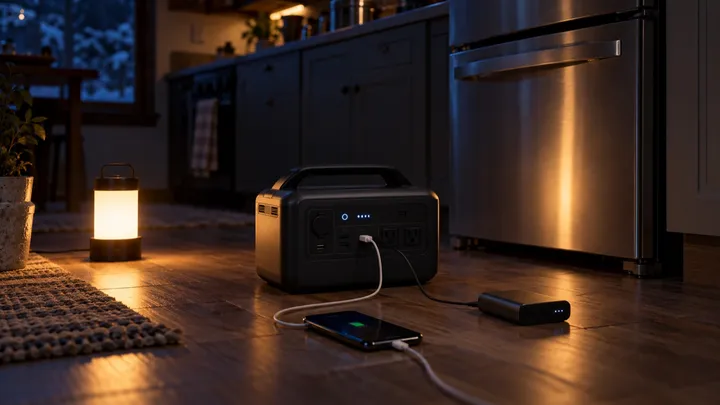
Size backup power from your own appliances
Seller charts round up. Our guides show the calculation: read the label on your fridge, furnace or CPAP, add the starting surge and the inverter losses, and you get the true hours from a generator or power station. Placement and hookup rules come first, so you run it safely from day one.

Stay warm without putting carbon monoxide in the house
When a winter storm cuts the power, the cold is one danger and an improvised heater is the other. Learn the one-warm-room method, which heaters are rated for indoor use and how to protect your pipes as the house cools.
How we research
- Primary sources in every guide. Figures come from Ready.gov, FoodSafety.gov, gov.uk, safety agencies and manufacturer manuals, linked in the sentence that uses them.
- A date on every page. You see when each guide was last updated and when each source was checked.
- Your country, your numbers. US, UK, Canadian and Australian figures side by side, with the working shown so you can redo it for your home.
Who runs Outage Kit HQ
Alexander Gusev edits every guide on Outage Kit HQ and turns the agency guidance, safety data and appliance manuals behind it into one clear answer, with the numbers and the link to check them.
Common questions
What should be in a power outage emergency kit?
Water, food that needs no cooking, a flashlight or lantern with spare batteries, a battery or crank radio, a way to charge a phone, a first aid kit, a few days of medicines and some cash. Ready.gov and the UK government both start from that core. How much of each you need depends on how many people live with you and how long outages last where you live, which is what our kit guide works out.
How long does food stay safe in the fridge without power?
About 4 hours if you keep the door shut, according to FoodSafety.gov. A full freezer holds a safe temperature for about 48 hours and a half-full one for about 24. An appliance thermometer settles it: food that has stayed at 40 °F (4 °C) or below is safe.
Can I run a generator in the garage with the door open?
No. An open garage door does not clear carbon monoxide fast enough. The CDC says to run generators outside and at least 20 feet from doors, windows and vents, and to have a battery CO alarm inside.
Can I heat the house with a gas oven or stove?
No. The CDC says never to use a gas range or oven to heat a home, because it fills the house with carbon monoxide. Close off one room, layer up and use a heater rated for indoor use. Our staying-warm guides show how to keep that room warm for days.
Why does advice differ between countries?
Governments set different targets. The UK asks households to be ready for three days, Norway for a week, and Ready.gov for at least several days. Radio advice differs too: FM in the UK, the NOAA weather band in the US. Every guide names the country behind each figure.